
Midnight Memories:
Mendelssohn, Mahler, Moderns
Fanny Mendelssohn and Gustav Mahler brush shoulders with composers of our time, past and present connecting through musical memories.
Arrive 30 minutes before the concert for a pre-concert talk and Q&A with composer Artur Akshelyan and Artistic Director Matilda Hofman.
All ticket holders are invited to attend.
Program includes:
Roberto Sierra - Tríptico
Gustav Mahler - Rückert-Lieder (arr. David Hefti)
Fanny Mendelssohn - Piano Trio in D Minor, Op. 11
Artur Akshelyan - Sillage (2024 Composition Contest Winner)
Artists
Nikki Einfeld, soprano
Michael Goldberg, guitar
Anna Presler, violin
Liana Bérubé, violin
Phyllis Kamrin, viola
Tanya Tomkins, cello
Leighton Fong, cello
Allegra Chapman, piano
Meet the composers


-
Roberto Sierra - Tríptico
Writing for the guitar is a great challenge for two main reasons. First, the repertoire is abundant in pieces that display a highly sophisticated idiomatic writing, and precisely because of this very fact we arrive at the second reason: it is difficult not to fall into the beaten track of salon music that seems to be the general trade mark of great part of the repertoire. In Tríptico I wanted to achieve a type of idiomatic writing that at the same time would not be cliche-ridden. For this purpose I went in an exploration of the whole spectrum of the registers in unusual timbre combination with the string quartet, that in certain sections of the work acquire a nocturnal character evocative of the Puerto Rican tropical nights (the ubiquitous tree frog popularly known as "coquí" is also present in the musical fabric.) Of great interest to me is the folk and popular music of the Caribbean which was the inspirational source of the last movement. The allusions to popular rhythms are abstracted in such a manner that their transparent textures seem to float in the air like apparitions.
Artur Akshelyan - SillageThe piece was commissioned in the frame of the UCLA Armenian Music Program and engages with the poetry of 20th-century Armenian author Z. Melkonian. Based on the text choices, I settled on a philosophically charged poem in which emotions embody a certain nostalgia, as if fragments of life and death coexist in collective memory, shaped by both past and future. Musically, this translated into short phrases or repeated words, most intimately expressed through voice and string quartet. I imagined soft, meditative passages alongside abrupt, ad libitum gestures, where repetition connects voice and strings, projecting the “nature of the moment” and its emotional resonance.
The piece unfolds in three movements. The first grows from stretched harmonies, echoing a “traditional past,” into fluid, aquatic textures of nostalgic repetition. The second contrasts recitation with sudden outbursts, words like Ablaze, Fire— creating an onomatopoeic intensity. The final movement turns toward a simple song, a summary that ends in filtered, fragmented ways.
Fanny Mendelssohn - Piano Trio in D Minor, Op. 11
Fanny Mendelssohn (1805-1847) was born in Germany to a musical family. Despite their reservations about a woman’s place in the world of composition, Mendelssohn’s parents ensured their daughter received quality training in piano performance. By the age of fourteen, Mendelssohn could perform from memory the twenty-four preludes from Johann Sebastian Bach’s The Well-Tempered Clavier. She received praise from her teachers and contemporaries — the likes of Carl Friedrich Zelter, who described Mendelssohn as “really something special” and, in what would have been considered a compliment at that time, applauded her ability to play piano “like a man.”
It may have been her proximity to other musical women — including family members involved in the thriving musical salon scene of the time — that encouraged Mendelssohn to pursue her own artistic inclinations. While opportunities for publication remained virtually impossible for women of her time, Mendelssohn served as an invaluable confidante and musical advisor to her younger brother, Felix, who included several of her works in his own publications, a common compromise given the limited opportunities for women in Mendelssohn’s time to publish under their own names. Her marriage to artist Wilhelm Hensel in 1829, though, bolstered her confidence as a composer; Hensel encouraged her not only to continue composing but also to seek publication under her own name. Composed one year before her death, Mendelssohn’s Piano Trio in D Minor was a bold, large-scale work for a composer who once confessed in a letter that she felt unable to “sustain ideas properly and give them the needed consistency.” Lacking in neither development nor musical complexity, the piece was composed as a birthday present for Mendelssohn’s younger sister and was later published posthumously under its composer’s own name in 1850.
The piece opens with Allegro molto vivace, in which tumultuous piano figures, lyrical melodies, and an intense emotional undercurrent define the piece as clearly Romantic from the very start. As expressive as it is musically complex, the movement sets the tone for the rest of the piece to come. The second movement — Andante espressivo — begins with a contrasting, tender piano feature which gives way to a heartfelt, song-like interplay between the instrumental voices. Lingering and contemplative, the music moves with an almost improvisatory grace, concluding just as it began, with the piano sounding alone. The third movement, Lied: Allegretto, is an impressive representation of Mendelssohn’s skill in the genre of lieder, to which she devoted much of her compositional career. The movement is at once compact and light, elegant and playful — a gentle interlude and a spacious precursor to the stormy finale on the horizon. The piece concludes with Allegretto moderato, in which the piece's initial fiery tone returns in full, subtly at first and building in momentum over the course of the movement. The piece ends with power and conviction, the first movement’s main theme returning in a new light to affirm the emotional journey of the piece and to bring the work to a triumphant close.
Gustav Mahler - Rückert-Lieder (arr. David Hefti)
Gustav Mahler (1860-1911) was both a conductor and a composer, a Romantic and a modernist. Born in Bohemia (modern-day Czech Republic) to a Jewish family, Mahler excelled in his early musical training before going on to accept prestigious conducting appointments at the Vienna Court Opera, the New York Metropolitan Opera, and the New York Philharmonic. During his lifetime, he was renowned as a conductor; though he devoted many of his summers to composition, most of the music he wrote would not be celebrated — or even widely accepted — until long after his death. His compositions, now regarded as among the most extensively recorded of any composer, are often divided by musicologists into three creative periods: his early works, influenced by German folk poetry and song; a middle period marked by expansive symphonic writing and increasing emotional complexity; and a final, introspective phase that turned inward toward spiritual reflection and a preoccupation with mortality. Written during the middle period, Mahler’s Rückert-Lieder was composed in the summers of 1901 and 1902 and sets the work of Friedrich Rückert, a German poet whose verses explored topics such as love, loss, and the natural world.
Mahler originally composed Rückert-Lieder in two arrangements: one for voice and piano, and the other for voice and orchestra. This performance features an intimate chamber adaptation of the work for string quartet and soprano, arranged by Swiss composer and conductor David Philip Hefti. Composed following a near-death experience from which Mahler would never fully recover, the songs thoughtfully explore topics of love, mortality, and legacy. The cycle marks a distinct departure from Mahler’s earlier works — trading epic emotional journeys for tender expressions of the human heart.
The cycle begins with “Liebst du um Schönheit” (“If you love for beauty”), a song Mahler dedicated to his wife Alma, denouncing the frivolous vanities of the world in favor of a deeper, more enduring affection. What follows is “Blicke mir nicht in die Lieder” (“Do not look into my songs!”), a playful but insightful reflection on an artist’s creative process; and “Ich atmet’ einen linden Duft” (“I breathed a gentle fragrance”), a sensory meditation in which love takes the form of a pleasant aroma. The fourth song, “Um Mitternacht” (“At midnight”), dives into an existential examination of grief and faith amid the solitude of night. The cycle concludes with “Ich bin der Welt abhanden gekommen” (“I am lost to the world”), in which a welcome detachment from the world provides a deep sense of personal fulfillment and resounding peace.
-
-
>> VACCINATION & MASK POLICY
Proof of COVID-19 vaccination and masking are no longer required at these venues.
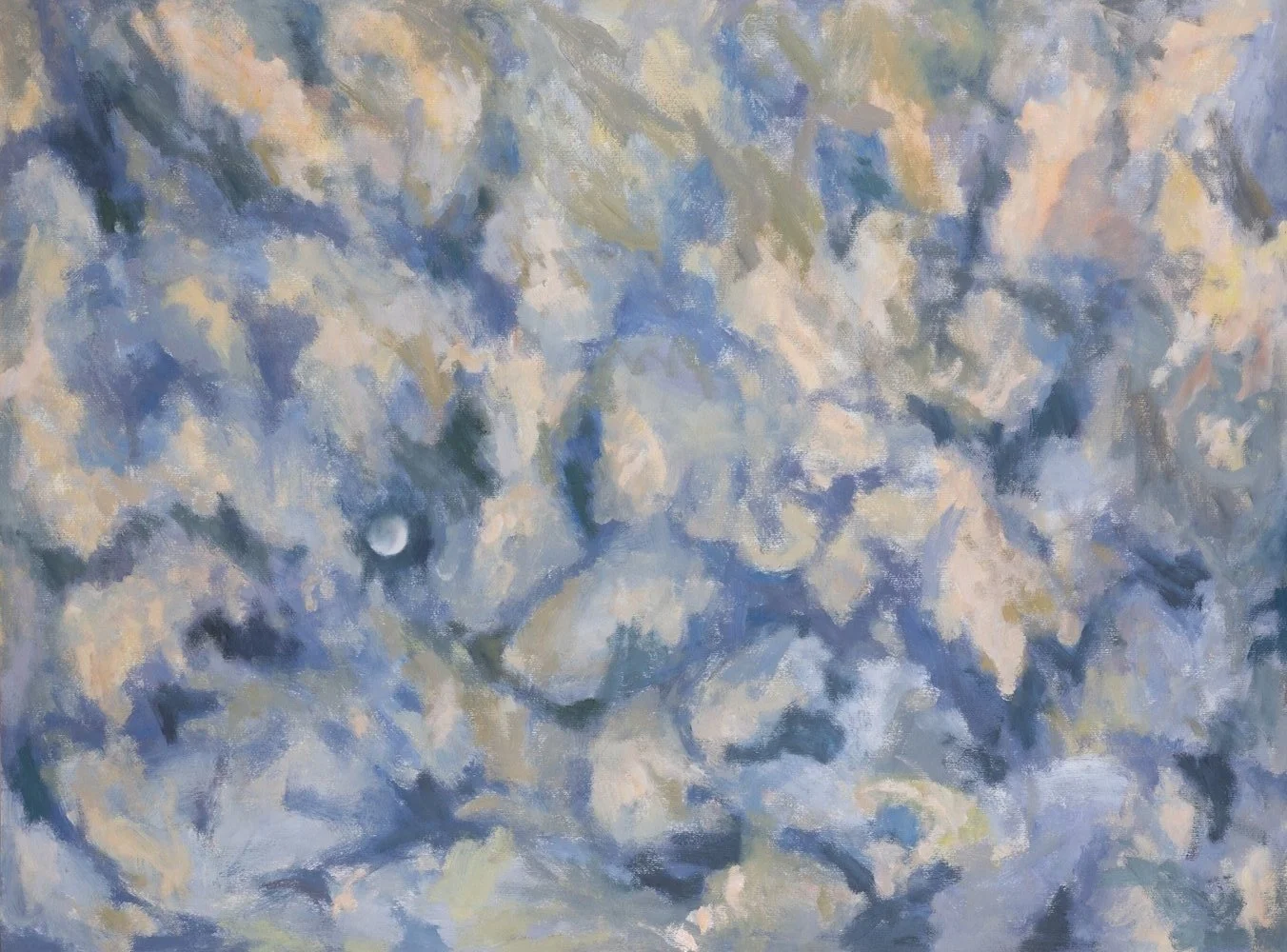
Image credit: Copyright Sally K. Smith, used by permission of Artist. The banner image is a detail of Morning Moon.
Saturday, November 1, 2025, 7:30 PM
Noe Valley Ministry
1021 Sanchez Street
San Francisco, CA 94114
Sunday, November 2, 2025, 4:00 PM
First Church of Christ, Scientist
2619 Dwight Way
Berkeley, CA 94720