LEFT COAST AND VOLTI PRESENT
Sound Stories
Volti and Left Coast meet in a bold and dramatic new work by Chris Castro for storyteller and musicians, which delves into the ancient and universal human explanations for our beginnings. The human relationship to our environment forms a through-line from romantic to experimental musical sensibilities.
Arrive 30 minutes before the concert for a pre-concert talk and Q&A! All ticket holders are invited to attend. Features Chris Castro, Mark Winges, and Allegra Chapman; moderated by Cole Thomason-Redus.
Program includes:
Mark Winges - Seasons Falling Through the Clouds
Chris Castro - Babel* (World Premiere)
with Susan Strauss, storyteller
Robert Schumann - Fantasiestücke, Op. 12, selections
Shawn Okpebholo - Fractured Water
Artists
Stacey Pelinka, flute
Phyllis Kamrin, viola
Leighton Fong, cello
Allegra Chapman, piano
Clayton Luckadoo, clarinet (guest artist)
Susan Strauss, storyteller (guest artist)
with Volti SF
* Chris Castro’s new work is commissioned by the Fromm Foundation
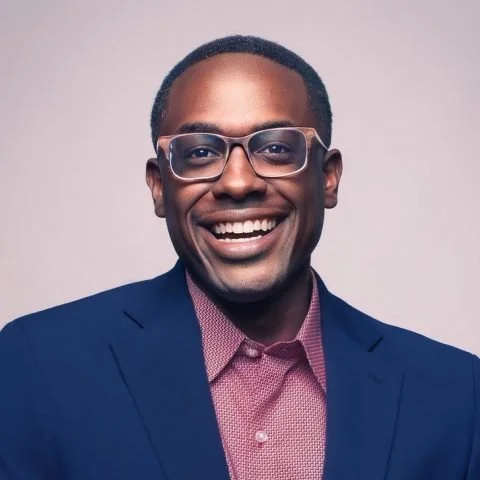
Meet the composers


-
Chris Castro - Babel
The impetus for writing Babel was our ancient need to understand the origins of life and mortality using the art of storytelling. The title is a broad allegory for the many different creation myths in the world. Although I do not belong to any of the cultures whose stories or poems appear in this piece, I chose the works for their beauty and variety.
The composition of Babel was a struggle. It was a challenge to select the right texts and stories, as I wanted to establish a tone reverent yet humorous, but serious enough to shed light upon the common human desire for explanation.
I lovingly joke that this piece is a Concerto for Storyteller. It is truly a symphonic concerto in the spirit of works such as Mozart’s Sinfonia Concertante, Shostakovich’s first Violin Concerto, Gubaidulina’s Bassoon Concerto, and Gil Evans’ Porgy and Bess. In Babel, my soloist is Susan Strauss. The immense challenge of our work together is that she tells the story differently every time, as only the best Storytellers do, without text.
I have had the honor of composing music to accompany Susan’s tremendous storytelling since 2019. Composing Babel was a joy because I was given the creative freedom not only to select the stories she told but also to build works around them for choir only. From Susan’s vast knowledge of global myths and legends, I have chosen three:
The first, which I have named Calling, is a creation myth of the Skidi Pawnee who are indigenous to the central plains of Nebraska and Kansas. The second, called Corn is Born, is a retelling of the Zuni people’s legend about the origins of corn in New Mexico. The third, which I have named Golden Apples, recounts the birth of Zeus who is the supreme deity and leader of the ancient Greek pantheon.
Surrounding the stories are four partsongs for choir alone:
God’s World depicts poet Edna Saint Vincent Millay’s agonizing attempts to describe how beautiful the world is. In Achilles’ Shield, the poet Homer describes the forging of the warrior’s shield, often seen as a metaphor for the forging of the world. La Biblioteca de Babel (The Library of Babel) is Argentine writer Jorge Luis Borges’ description of a rather mundane, endless, and eternal library representing the all-consuming human quest for knowledge. Let Me Tell You includes two short excerpts from two different writers: Paul Blackburn and Fernando Pessoa. This final closing text encapsulates the somber yet ridiculous idea that all groups of people, throughout human history, repeat the same basic concepts for better or for worse.
Shawn Okpebholo - Fractured Water
FRACTURED /ˈfrakCHərd/ adjective: split or broken and unable to function or exist.
WATER /ˈwôdər / noun: Water; noun: a colorless, transparent, odorless liquid that forms the seas, lakes, rivers, and rain and is the basis of the fluids of living organisms.
Fractured Water is a trio for flute, cello, and piano, where each performer—at various points throughout the composition—doubles on water percussion. This work was commissioned by The Fifth House Ensemble (5HE) for their Rivers Empyrean Concert Series. 5HE writes, “at a time when the environment is more threatened than ever with pollution and our life-giving waterways at risk, 5HE traces the life cycle of water from its metaphorical descent from the heavens as rain, to its long journey in streams and rivers informed by conservation experts and ecologists.” In Fractured Water, I attempt to bring awareness to pressing concerns about water pollution, conservation, and perseveration with a particular focus on the Chicago River. Living in the Chicagoland, this river has personal significance, not only for its beauty but also as a sustaining life-source for people and animals in this region. Perhaps the most famous aspect of the Chicago River is that in 1887, through innovative human-engineering, the flow of the river was reversed to deal with an environmental and sanitary crisis due to pollution and waste.
I have found that discussions on the topic of the environment and water pollution center on three distinct narratives: sincere concern (shedding light on a genuine life-altering issue); argument (working out how to solve these issues, often highjacked by diametrically opposed political debates); and hope. My interpretation of and engagement with these three narratives is the source of my musical expression. Because of the reversing of the Chicago River’s flow, throughout this piece, there are instances, some subtle, of musical retrograde. Despite the risks posed to vital waterways throughout the world, Fractured Water has elements of hope, as I reference in the spiritual, Down in the River to Pray.
Mark Winges- Seasons Falling Through the Clouds
The subtitle A Cycle for Voices and Instruments is probably the most succinct (and accurate) description of Seasons Falling Through the Clouds. Not only are there cyclic elements in the music, but the poems work together as parts of a cycle as well. The poems all have times and seasons as their primary or secondary subject matter, as demonstrated in the movement from spring (Blossom), to summer (Two Haiku) and on to late fall (All Hallows). Melodic material is shared by all movements as well. The opening motive of the first movement (E, F#, B, A#) permeates the composition, sometimes in the foreground, sometimes in the background.
Setting off the cyclic unity of the piece is the ordering and character of the individual movements. I deliberately tried to contrast the individual movements musically, based on the obvious differences in the mood of the individual poems. Both Two Haiku and The Ground Mist are slow evocations that are quite dissimilar to the more active textures in Blossom or Rain. All Hallows is a slightly longer movement, and in a sense sums up the entire cycle.
I also want to draw attention to the role of the instruments. The piece is a real chamber work; the instruments and the chorus are equal partners in the music. Even beyond the texts and various technical aspects that tie the piece together, it is this combined sound-world of these specific instruments and choral voices that create a musical whole.
Seasons Falling Through the Clouds was originally written in 1992 / 93. When reviewing the score last summer, I couldn’t help making minor changes, especially in the vocal fabric. Clarity, and ease in performance were goals in the revisions. This performance is the premiere of the revised version.
Robert Schumann - Fantasiestücke, Op. 12
Born in Zwickau, Germany, Robert Schumann (1810–1856) was a central figure of the Romantic era, whose turbulent life and career produced some of the most emotionally charged and imaginative music of the 19th century. Though he faced pressure from his parents to study law, Schumann devoted himself to piano performance until a long-term injury to his right hand encouraged him to turn towards composition. His father, a bookseller, introduced him early on to the extensive catalogues of German literature, which would continually inform and inspire his musical compositions. In his music, Schumann also often explored the concept of dualities, which he recognized within himself, famously inventing his own alter egos: Eusebius, who represents introspection; and Florestan, who represents passion.
Composed in 1837, Schumann’s Fantasiestücke, Op. 12 is a set of eight character pieces — of which three will be performed this evening. In writing this highly emotive music, Schumann took much inspiration from the work of E. T. A. Hoffmann (1776–1822), a German writer whose works exemplify the Romantic fascination with the fantastic. Schumann’s Fantasiestücke, Op. 12 explores these qualities; it is at once anchored in the Romantic tradition and free to wander through the many facets of Schumann’s imagination.
The set begins with Des Abends (“In the Evening”), a movement which Schumann reported was meant to evoke a “gentle picture of dusk.” Calm and dreamlike, the movement is often understood to embody Eusebius, the symbolic representation of Schumann’s introspective half. The lilting rise and fall of the melodic contour over the course of the movement contributes to a quality reminiscent of a lullaby, setting a peaceful tone for a moment of quiet reverie.
The second movement, entitled Aufschwung (“Soaring”), is thought to represent the character of Florestan, representing the half of Schumann that was passionate and driven, almost to the point of recklessness. Never truly resting, the music speeds through virtuosic passages before slowing to a moment of apparent stillness; and yet anxious, rumbling figures in the low register gradually crescendo to once again overtake the quiet. The movement closes with the same fervid energy with which it began.
Concluding this selection of movements is Warum? (“Why?”) — music which begins with questioning and ends with no clear answer. Regular syncopations, stuttering grace notes, and brief dissonances make for a metric and harmonic ambiguity that aligns with the thematic center of the movement. In this music’s ambiguity, one glimpses the heart of the composer, who was both Eusebius and Florestan, as complex and multifaceted as the music he composed.
-
-
>> VACCINATION & MASK POLICY
Proof of COVID-19 vaccination and masking are no longer required at these venues.
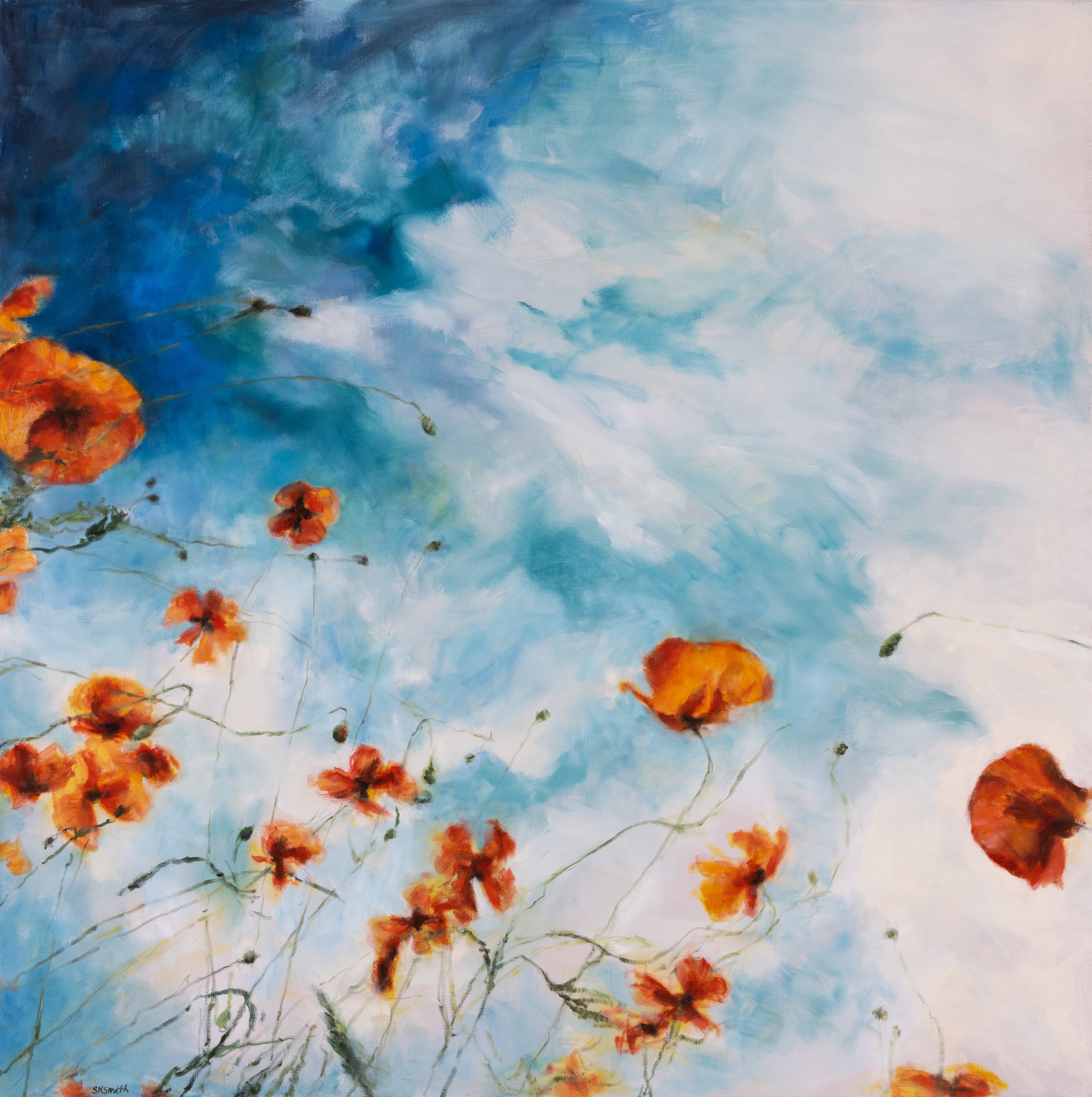
Image credit: Copyright Sally K. Smith, used by permission of Artist. The banner image is a detail of Red Poppies.

Friday, March 20, 2026, 7:30 PM
Noe Valley Ministry
1021 Sanchez Street
San Francisco, CA 94114
Saturday, March 21, 2026, 7:30 PM
First Church of Christ, Scientist
2619 Dwight Way
Berkeley, CA 94720